For founders
Stop building on hope
Know what must be proved before you hire, raise or scale. Build a stronger company, preserve more ownership and stop paying for premature decisions.
Change How You BuildPetri Lehmuskoski
The most expensive startup decision is often a good decision made too early.
Once you learn to see proof, activity stops looking like progress, fundraising stops looking like success, and scaling stops looking brave when the business has not earned it.
Free chapter
Progress standing on matchsticks looks exactly like progress, until it doesn't.
Chapter 2: The Illusion of Progress shows how activity starts to sound like evidence, one reasonable step at a time.
Get Chapter 2 Free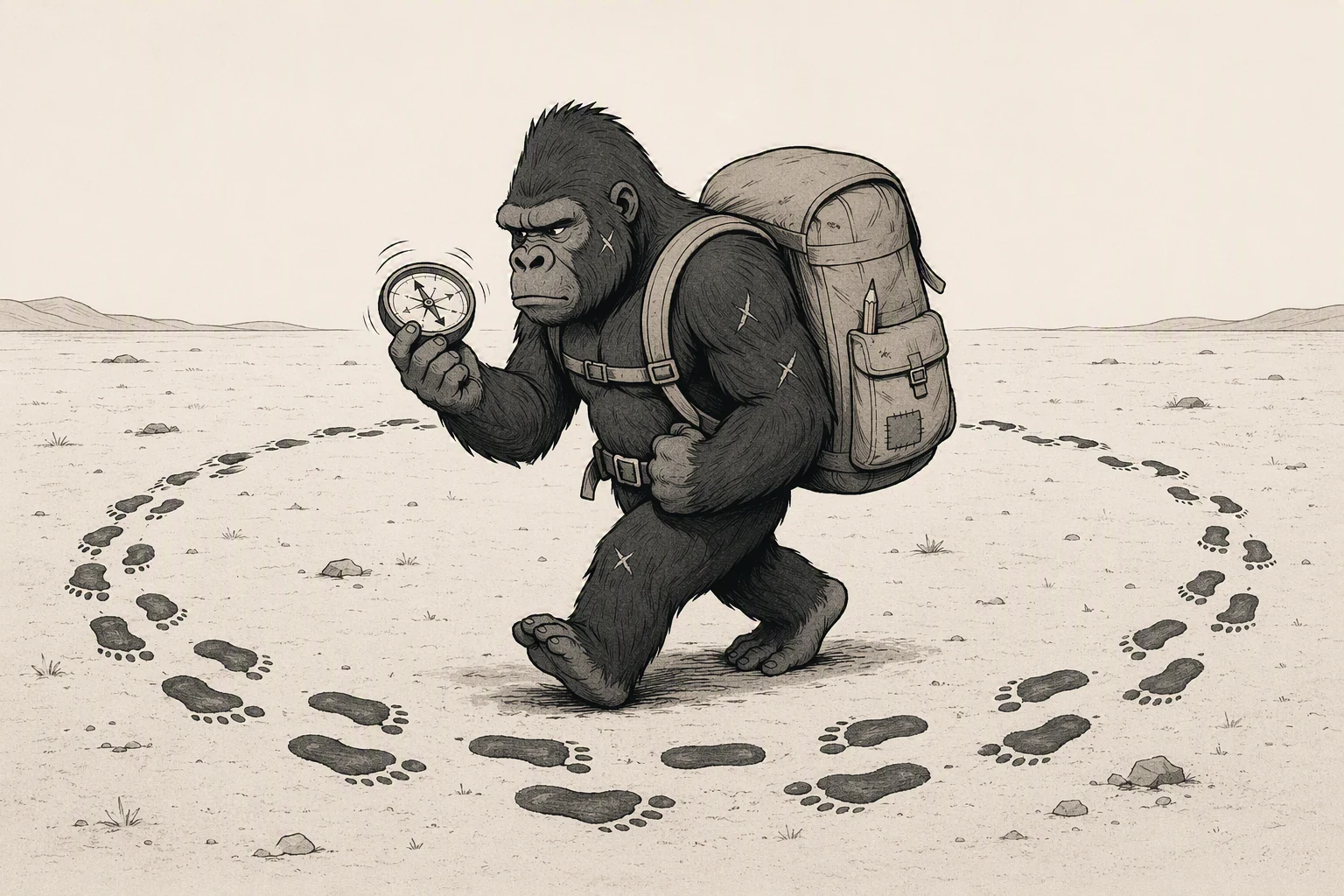
Every verified purchaser of More Scars Than Trophies may select one Proof Stack OS ebook, supplied both as a downloadable PDF and as a machine-readable Markdown file for use in their own AI tools, together with that book's separate role-specific AI chatbot.
Explains the theory and reasoning
Turns the theory into operating practice
Helps you question, navigate and apply it
Read it. Apply it. Question it.

Three perspectives
One evidence model, read from three seats at the table.
For founders
Know what must be proved before you hire, raise or scale. Build a stronger company, preserve more ownership and stop paying for premature decisions.
Change How You BuildFor angel investors
Distinguish stage-matched evidence from founder conviction, costless interest and manufactured momentum.
Change How You InvestFor startup boards
Replace activity reporting with proof. Know what the board should challenge, approve, postpone or refuse.
Change How You GovernBook and OS books
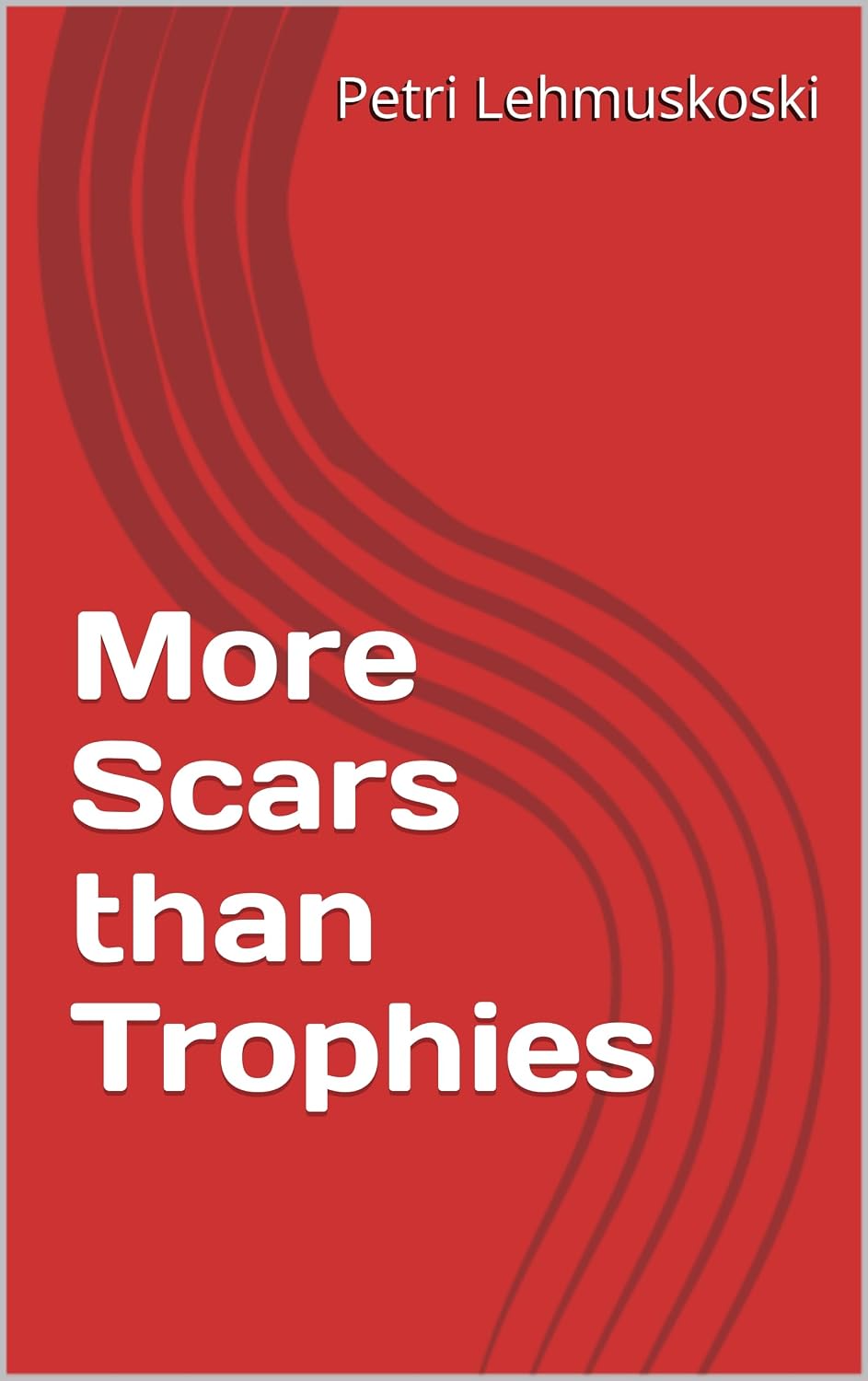
More Scars Than Trophies gives founders, investors and boards a shared evidence model for startup building.
It changes the question from:
Are we making progress?
to:
What has become true that was not true before?
The Proof Stack OS ebooks turn that new logic into operating practice.
Run the founder's day around proof, not noise.
Decide what deserves attention, what should stop, what can wait and which evidence must exist before the next commitment.
Spend fewer years solving the wrong problem. Use less capital discovering what could have been tested earlier. Retain more ownership for the company that eventually works.
Turn the board from a reporting ceremony into a decision system.
Connect governance, capital allocation, accountability and major commitments to the company's actual Proof Layer.
Make the board useful before the consequences become irreversible.
See the investment before the story persuades you.
Identify what has been proved, what remains assumed and which milestone should govern initial and follow-on capital.
Take early-stage risk deliberately, not accidentally.
Use capital to accelerate proof, not postpone it.
Startups generate interviews, pilots, product releases, pipeline, hiring, fundraising and board reporting.
The difficult question is not whether work is taking place.
The difficult question is: what has actually been proved, and which decisions does that proof justify?
Method
Five stages of evidence, with governance running across all of them.
Discovery is the first stage but not a Proof layer. It generates hypotheses; the four Proof layers that follow each require external buyer behaviour, and each begins with its own discovery work.
Without stage-matched evidence, effort circles back over its own tracks. The Proof Stack names what must be true before each next commitment.
Do we understand the problem well enough to choose a direction?
Unlocks:
Commit to building for this problem and this buyer, not yet to scaling it.
Will an identified buyer act, and on what terms?
Unlocks:
Invest further in acquiring this same buyer, repeatably.
Does the value we deliver show up in evidence a buyer recognises?
Unlocks:
Raise price, expand scope, or both, because the value is proven, not assumed.
Does the model hold when we build on top of it?
Unlocks:
Add resources: headcount, capital, geography, because the model holds under volume.
Is the evidence durable enough for someone else to underwrite?
Unlocks:
Treat the company as something a buyer or later investor can underwrite without you.
Governance runs across all five stages: it sets the evidence standard a decision must meet before it becomes hard to reverse.
A founder wants to hire five salespeople. The pipeline looks strong. The team feels ready.
The Proof Stack asks a different question first: has the sales process actually proved repeatable, with one or two reps, before it is staffed up?
If not, hiring five people does not scale the business. It scales the uncertainty.
The book
The most expensive startup decision is often a good decision made too early.
Most startup mistakes are not obviously bad decisions. They are decisions made before the relevant evidence exists.
More Scars Than Trophies introduces the Proof Stack, a practical framework for determining what a company has actually proved before committing more capital, people and time.
Written from more than four decades of operating and investing experience, the book helps founders, investors and startup boards distinguish genuine progress from activity, optimism and startup theatre. Its central principle is simple: the most expensive startup decision is often a good decision made too early.
Paperback available from 12 October 2026.
Free chapter
Progress standing on matchsticks looks exactly like progress, until it doesn't.
Most early-stage companies are active. Very little of that activity is proof. Chapter 2 shows how a polite conversation becomes “validation,” a pilot becomes “proof,” and a meeting becomes “traction,” each step reasonable, each one slightly too optimistic.
Read it before your next round, hire or roadmap decision. It applies whether you are building the company, funding it or sitting on its board.
No generic startup inspiration. One question that applies from every seat at the table.
PDF, 8 pages.
Want future chapters and role-specific material as they’re ready?

Petri Lehmuskoski has founded, scaled, repaired and exited companies over more than four decades. He is Founding & General Partner of Gorilla Capital.
About PetriFounder
Not: How fast can we grow?
But: What must we prove before adding fuel?
Investor
Not: How compelling is the opportunity?
But: What evidence justifies committing now?
Board
Not: Are we on plan?
But: Has the company earned its next irreversible decision?
The questions change. The decisions change. The company you build can change.
You will never look at a startup the same way again.