Definition
Run a board that changes decisions instead of reviewing slides
Governance theatre is the ritual of oversight without the substance of it: complete packs, polished meetings and no decision that would not have happened anyway.
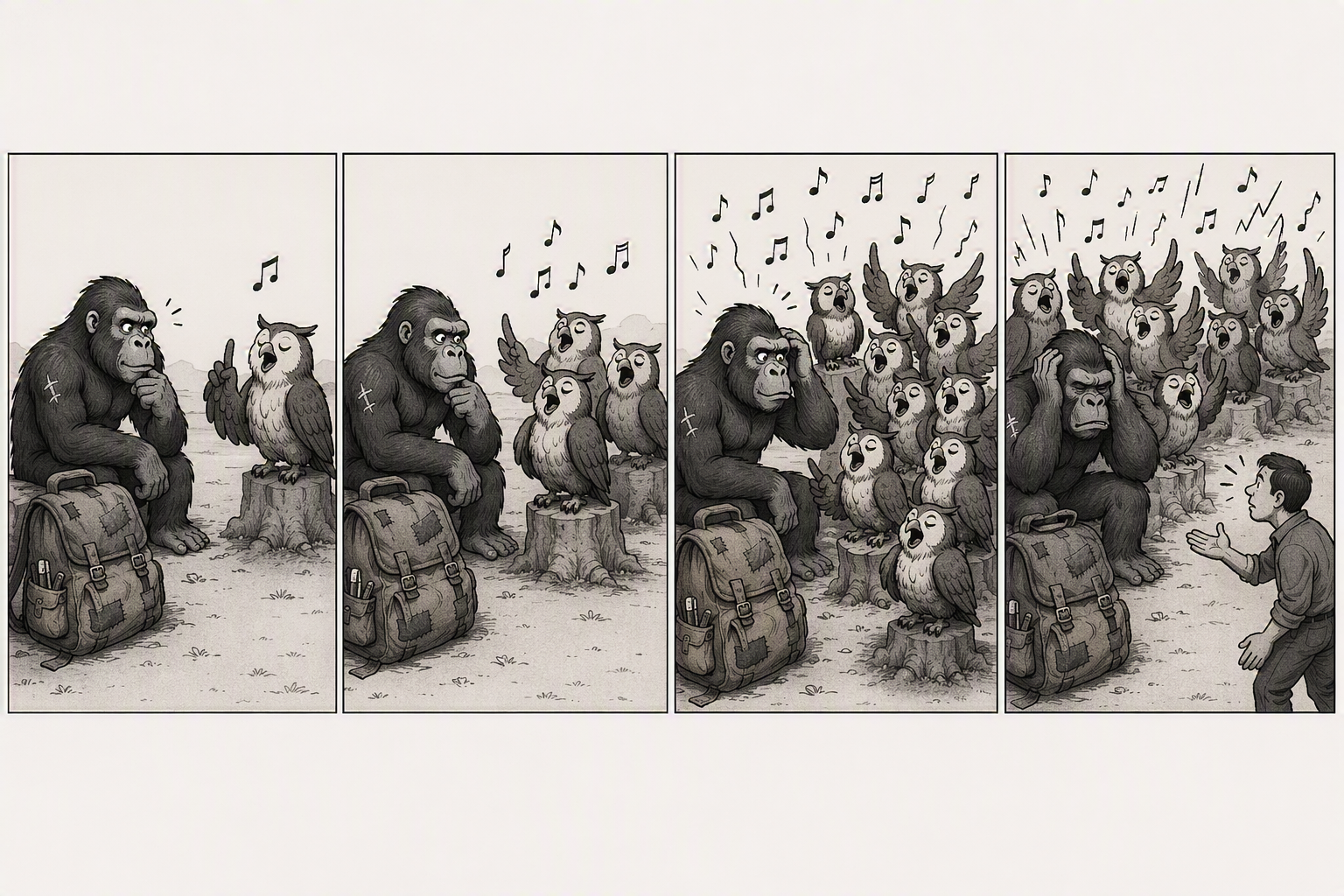
Boards are expensive, infrequent and structurally dependent on information the management team prepares. Governance without theatre replaces presentation review with an evidence standard the board sets in advance and applies consistently.
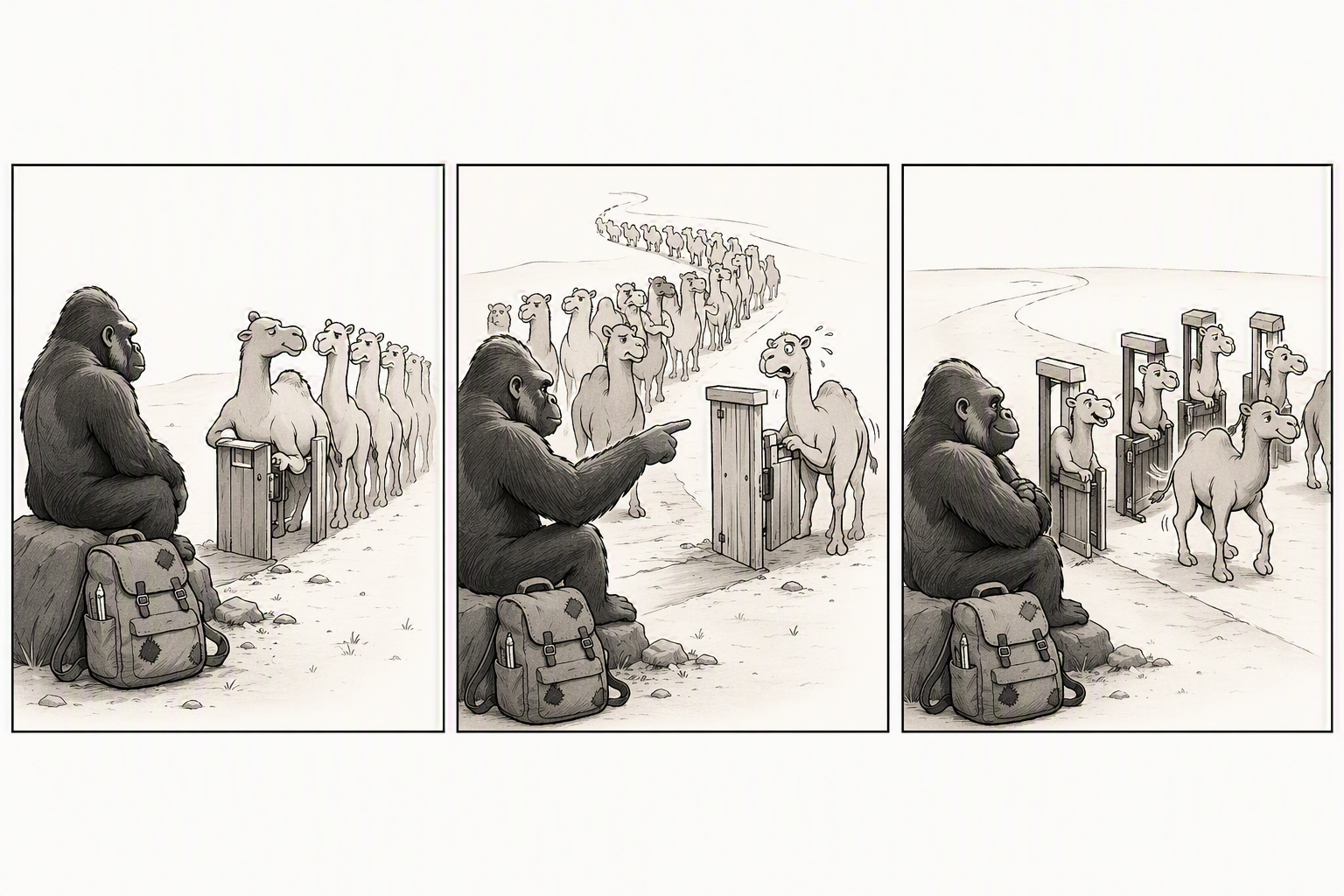
Governance without theatre is board practice in which decisions are tested against a stated evidence standard before they become irreversible, rather than reviewed after the fact through presentations.
Direct answer
What is governance without theatre?
Governance without theatre is board practice in which decisions are tested against a stated evidence standard before they become irreversible, rather than reviewed after the fact through presentations.
Deeper explanation
What it proves
- That the board applied a stated standard before a commitment
- That the evidence behind a decision was recorded at the time
What it does not prove
- That the decision was correct
- That the board has complete information
- That management and board incentives are aligned
Common false signals
- Pack completeness treated as oversight
- Long updates and short decisions
- Approvals granted on trajectory rather than evidence
- Risk registers that never change a decision
- Unanimity produced by seniority rather than by evidence
Founder implications
- You bring decisions to the board with the evidence and the reversal cost attached.
- You stop preparing for performance and start preparing for judgement.
Investor implications
- You use board time on the two or three commitments that are hard to reverse.
- You ask for the evidence standard to be set before the decision arrives.
Board implications
- You change the agenda from reporting to decisions and their evidence.
- You minute the evidence, not just the resolution.
- You hold the same standard when the news is good.
What changes in the meeting itself
- Decisions are listed first, with reversal cost stated for each
- Evidence is presented in the counterparty's terms, not the company's
- Assumptions carry named owners and a falsification test
- Postponement is an acceptable, recorded outcome
Where this sits in the book and the OS ebooks
More Scars Than Trophies explains governance without theatre as theory: why the distinction exists and how it changes judgement. The Proof Stack OS ebooks turn it into operating practice, and each OS ebook has its own separate role-specific AI chatbot.
- Proof Stack Company OS: The company and board operating system for evidence-based governance.
- Proof Stack Investor OS: The angel investor's operating system for evidence-based startup decisions.
Evidence boundaries
What this page does not claim
The limits of the model are stated on the page, not buried in a footnote.
- This is an operating practice, not legal or fiduciary advice. Directors' duties are set by law and by the company's constitution.
- The model does not prescribe board composition, committee structure or remuneration.
Audience implications
What changes for each reader
The same evidence standard, read from three different seats.
Founders
- You bring decisions to the board with the evidence and the reversal cost attached.
- You stop preparing for performance and start preparing for judgement.
Investors
- You use board time on the two or three commitments that are hard to reverse.
- You ask for the evidence standard to be set before the decision arrives.
Boards
- You change the agenda from reporting to decisions and their evidence.
- You minute the evidence, not just the resolution.
- You hold the same standard when the news is good.
Author
Petri Lehmuskoski
Petri Lehmuskoski has founded, scaled, repaired and exited companies over more than four decades. He is Founding & General Partner of Gorilla Capital.
Disagree with something here, or want it covered from another angle? Send a short note.
Related
Continue through the model
- Irreversible decisions
An irreversible decision is a commitment that cannot be undone cheaply or quickly, because reversing it costs capital, time, credibility, relationships or options the company cannot replace.
- Evidence versus activity
Evidence is a change in external behaviour caused by the company's work; activity is the work itself, and no amount of it substitutes for evidence.
- Exit Proof
Exit Proof is evidence durable and verifiable enough for an acquirer or later investor to underwrite without relying on the current team's interpretation.
A plain-text version of this evidence layer, generated from the same page content, is available at /concepts.md.
Read the chapter that starts the argument
Chapter 1: Most Founders Do Not Fail Because They Make Bad Decisions. Free to read now, no email required.