Proof layer
Build evidence someone else is willing to underwrite
Exit Proof is the layer where a company's evidence has to survive being examined by someone who does not believe the story.
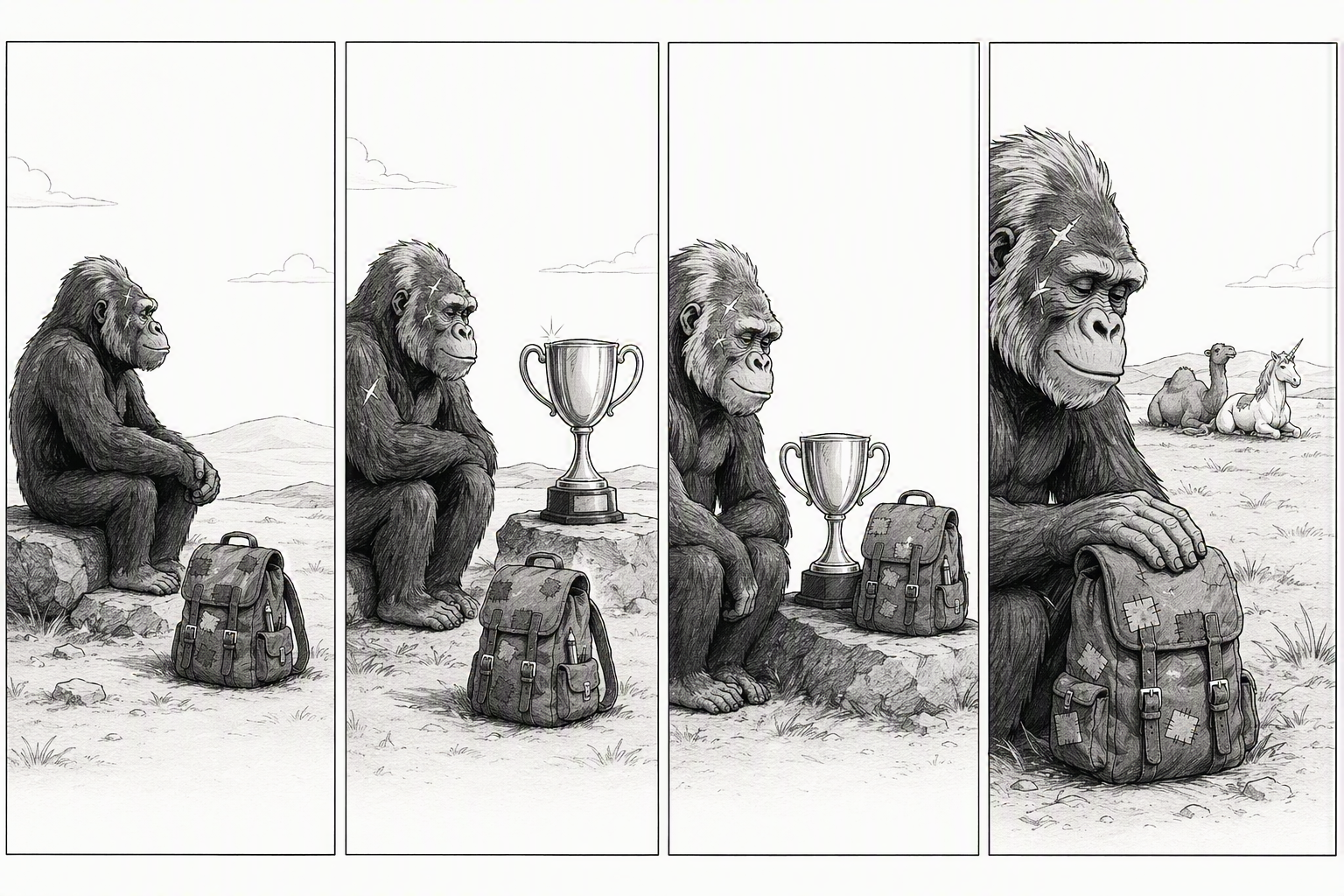
An acquirer or later-stage investor is not buying the narrative; they are underwriting the evidence and the risk that it is wrong. Exit Proof is built years before a transaction, in how decisions were made and recorded.
Direct answer
What is exit Proof?
Exit Proof is evidence durable and verifiable enough for an acquirer or later investor to underwrite without relying on the current team's interpretation.
Deeper explanation
What it proves
- That the evidence survives external examination
- That results are documented, traceable and not dependent on interpretation
- That the company's value does not rest entirely on individuals who may leave
What it does not prove
- That a transaction will happen
- That a particular valuation is achievable
- That the market for the company will be favourable
Common false signals
- A well-produced data room over undocumented decisions
- Concentration risk presented as a flagship relationship
- Contracts whose terms differ from how revenue is reported
- Key-person dependency described as founder commitment
- Retrospective explanations for results no one recorded at the time
Founder implications
- You record the evidence behind decisions while it is cheap to record.
- You reduce the number of facts that only exist in your head.
Investor implications
- You test whether the company's evidence can be re-derived by a third party.
- You treat documentation discipline as a proxy for decision discipline.
Board implications
- You require decisions and their evidence to be minuted at the time.
- You surface concentration and key-person risk before a process begins.
Why diligence is a reading of your past decisions
Diligence does not create facts; it retrieves them. Companies that decided against a stated evidence standard have a diligence process. Companies that decided on conviction have a reconstruction project.
Where this sits in the book and the OS ebooks
More Scars Than Trophies explains exit Proof as theory: why the distinction exists and how it changes judgement. The Proof Stack OS ebooks turn it into operating practice, and each OS ebook has its own separate role-specific AI chatbot.
- Proof Stack Company OS: The company and board operating system for evidence-based governance.
- Proof Stack Investor OS: The angel investor's operating system for evidence-based startup decisions.
Evidence boundaries
What this page does not claim
The limits of the model are stated on the page, not buried in a footnote.
- Exit Proof concerns the durability of evidence. It makes no claim about valuation, timing or transaction likelihood.
- Nothing in this model is investment, legal, tax or financial advice.
Audience implications
What changes for each reader
The same evidence standard, read from three different seats.
Founders
- You record the evidence behind decisions while it is cheap to record.
- You reduce the number of facts that only exist in your head.
Investors
- You test whether the company's evidence can be re-derived by a third party.
- You treat documentation discipline as a proxy for decision discipline.
Boards
- You require decisions and their evidence to be minuted at the time.
- You surface concentration and key-person risk before a process begins.
Author
Petri Lehmuskoski
Petri Lehmuskoski has founded, scaled, repaired and exited companies over more than four decades. He is Founding & General Partner of Gorilla Capital.
Disagree with something here, or want it covered from another angle? Send a short note.
Related
Continue through the model
- Scaling Proof
Scaling Proof is evidence that the model continues to hold as volume, complexity and headcount rise, without depending on unrepeatable effort.
- Governance without theatre
Governance without theatre is board practice in which decisions are tested against a stated evidence standard before they become irreversible, rather than reviewed after the fact through presentations.
- Irreversible decisions
An irreversible decision is a commitment that cannot be undone cheaply or quickly, because reversing it costs capital, time, credibility, relationships or options the company cannot replace.
A plain-text version of this evidence layer, generated from the same page content, is available at /concepts.md.
Read the chapter that starts the argument
Chapter 1: Most Founders Do Not Fail Because They Make Bad Decisions. Free to read now, no email required.