Proof layer
Test whether the model survives being built on
Scaling Proof asks whether the working model still works when volume, complexity and people are added to it.
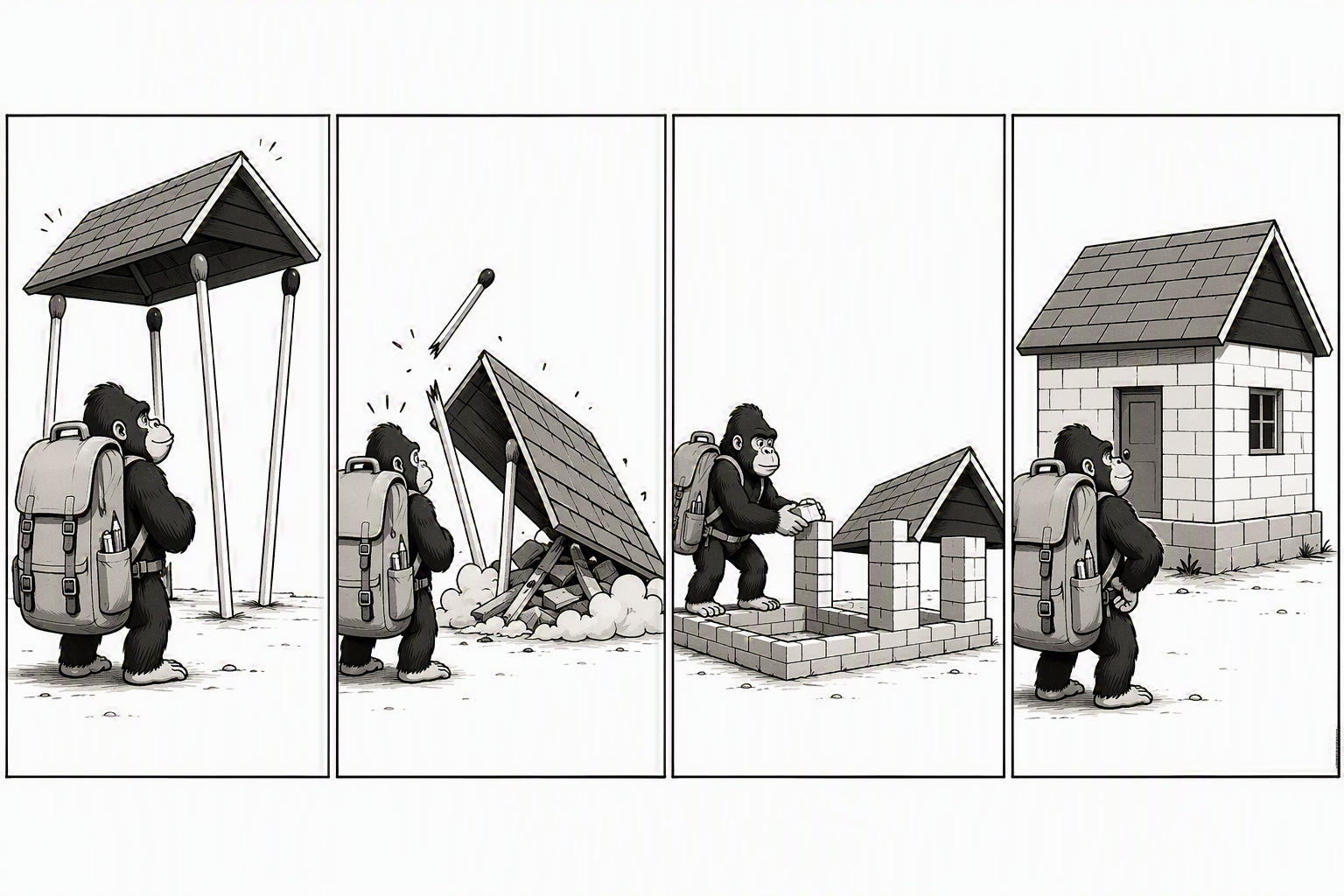
Scaling is the most expensive way to discover that a model was fragile. This layer separates growth that the model produced from growth that effort, discounting or a single unusual channel produced.
Direct answer
What is scaling Proof?
Scaling Proof is evidence that the model continues to hold as volume, complexity and headcount rise, without depending on unrepeatable effort.
Deeper explanation
What it proves
- That the acquisition and delivery model survives added volume
- That results are produced by the system rather than by specific individuals
- That unit-level behaviour holds outside the first cohort
What it does not prove
- That the market is large enough to keep going
- That the organisation can be governed at the next size
- That the evidence is durable enough for a buyer or later investor
- That growth will continue at the current rate
Common false signals
- Growth bought with discounting or unsustainable acquisition spend
- One channel scaling while the rest of the model is untested
- Headcount growth reported as capability growth
- Cohort quality quietly falling while totals rise
- Founder or a single seller still closing the material deals
Founder implications
- You scale the part of the model that has evidence, and only that part.
- You watch cohort behaviour rather than totals.
- You treat a hiring plan as an irreversible decision, because in practice it is.
Investor implications
- You ask which part of the growth the model produced.
- You test whether later cohorts behave like the first.
Board implications
- You approve scale spend against evidence per unit, not against ambition.
- You require a named owner for each assumption the plan depends on.
The difference between growing and scaling
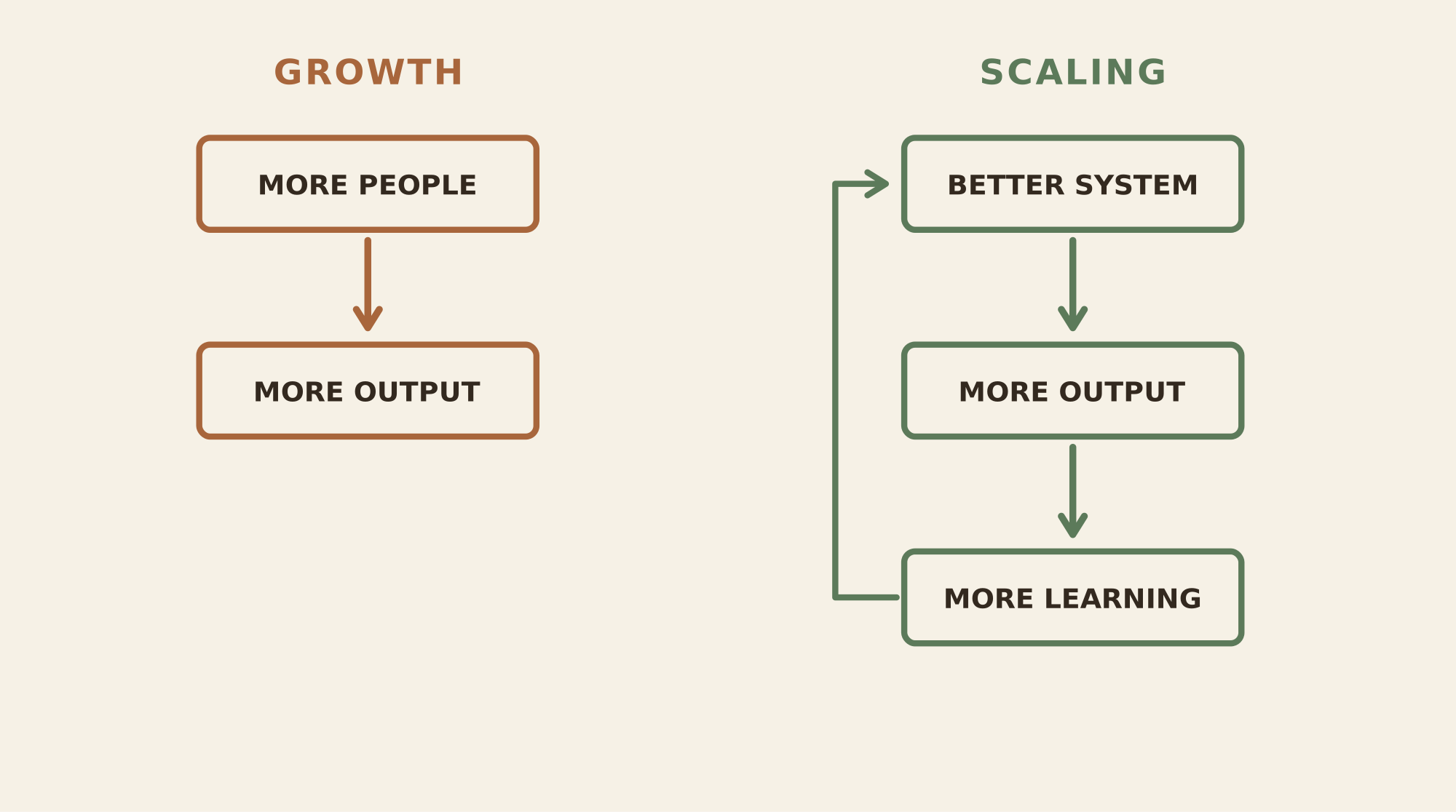
Growth is more output. Scaling is more output without a proportional increase in the effort, judgement or exceptional people required to produce it. A company can grow for a long time while its scaling evidence gets weaker.
Does this lower ambition?
This does not lower the ambition. It secures the road to it. Scaling Proof does not ask you to want less. It asks you to prove the model before you multiply it, so the multiplication does not multiply a mistake instead.
Where this sits in the book and the OS ebooks
More Scars Than Trophies explains scaling Proof as theory: why the distinction exists and how it changes judgement. The Proof Stack OS ebooks turn it into operating practice, and each OS ebook has its own separate role-specific AI chatbot.
- Proof Stack Daily OS: The founder's operating system for turning proof into daily decisions.
- Proof Stack Company OS: The company and board operating system for evidence-based governance.
- Proof Stack Investor OS: The angel investor's operating system for evidence-based startup decisions.
Evidence boundaries
What this page does not claim
The limits of the model are stated on the page, not buried in a footnote.
- Scaling Proof is about the model's behaviour, not about market size.
- Evidence at one order of magnitude is not evidence at the next.
Audience implications
What changes for each reader
The same evidence standard, read from three different seats.
Founders
- You scale the part of the model that has evidence, and only that part.
- You watch cohort behaviour rather than totals.
- You treat a hiring plan as an irreversible decision, because in practice it is.
Investors
- You ask which part of the growth the model produced.
- You test whether later cohorts behave like the first.
Boards
- You approve scale spend against evidence per unit, not against ambition.
- You require a named owner for each assumption the plan depends on.
Author
Petri Lehmuskoski
Petri Lehmuskoski has founded, scaled, repaired and exited companies over more than four decades. He is Founding & General Partner of Gorilla Capital.
Disagree with something here, or want it covered from another angle? Send a short note.
Related
Continue through the model
- Value Proof
Value Proof is evidence that the value delivered is recognised by the buyer in the buyer's own terms, and that it repeats.
- Hull speed
Hull speed is the practical limit of a company's current operating model, beyond which additional spend or effort produces disproportionately small gains.
- Exit Proof
Exit Proof is evidence durable and verifiable enough for an acquirer or later investor to underwrite without relying on the current team's interpretation.
A plain-text version of this evidence layer, generated from the same page content, is available at /concepts.md.
Read the chapter that starts the argument
Chapter 1: Most Founders Do Not Fail Because They Make Bad Decisions. Free to read now, no email required.