Proof layer
Prove the value you promised actually arrived
Value Proof is the layer where a purchase turns into a delivered, recognised, repeated result.
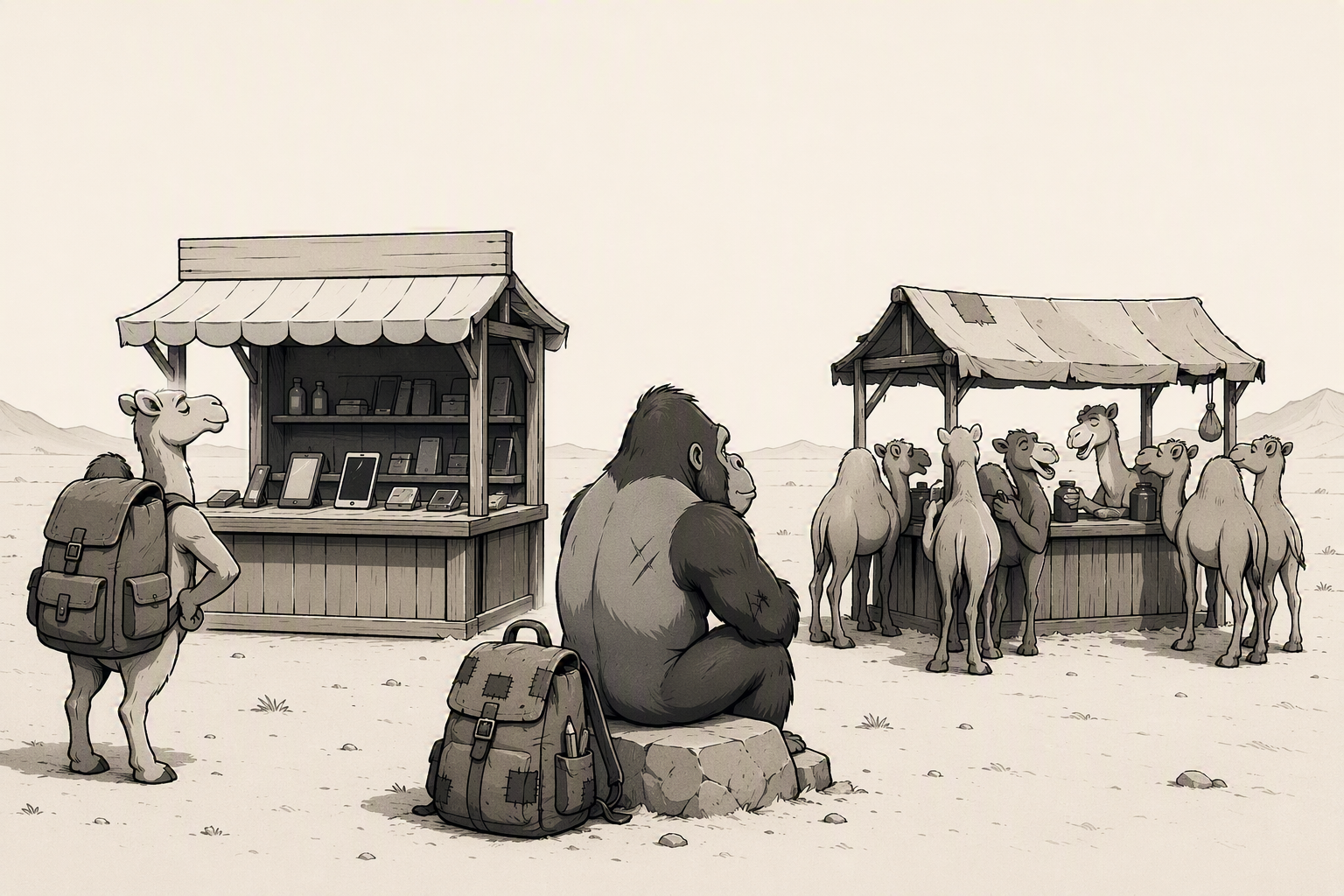
Buying is a decision; value is an outcome. Companies that scale on Buyer Proof alone scale their delivery problem. Value Proof asks whether the buyer recognises the result, in their own measures, often enough to keep behaving that way.
Direct answer
What is value Proof?
Value Proof is evidence that the value delivered is recognised by the buyer in the buyer's own terms, and that it repeats.
Deeper explanation
What it proves
- That the promised result was delivered at least once
- That the buyer recognises the result as value
- That the delivery repeats rather than depending on heroics
What it does not prove
- That delivery is economical at volume
- That the value holds for other buyer types
- That retention is secured
- That the company can build further layers on top
Common false signals
- Satisfaction scores with no behavioural consequence
- Value measured only by the seller's metrics
- Results delivered by unrepeatable manual effort
- Renewals driven by switching cost rather than value
- Case studies written before the outcome was verified
Founder implications
- You measure delivery in the buyer's language, not the product's.
- You separate value that repeats from value that was rescued by heroics.
- You fix delivery before you multiply it.
Investor implications
- You look for the buyer's own evidence that the result arrived.
- You treat unexplained churn as a Value Proof failure, not a marketing one.
Board implications
- You review the cost and repeatability of delivery, not only its quality.
- You require evidence of recognised value before approving scale investment.
Why the buyer's measures matter more than yours
A metric the seller invented can always be made to move. A measure the buyer already reported to someone else, such as cost, cycle time, risk, revenue, headcount or compliance, cannot be adjusted to protect the story.
Where this sits in the book and the OS ebooks
More Scars Than Trophies explains value Proof as theory: why the distinction exists and how it changes judgement. The Proof Stack OS ebooks turn it into operating practice, and each OS ebook has its own separate role-specific AI chatbot.
- Proof Stack Daily OS: The founder's operating system for turning proof into daily decisions.
- Proof Stack Company OS: The company and board operating system for evidence-based governance.
Evidence boundaries
What this page does not claim
The limits of the model are stated on the page, not buried in a footnote.
- Recognised value is evidence about the buyers who reported it, not about the market.
- The model does not prescribe any specific metric, framework or measurement tool.
Audience implications
What changes for each reader
The same evidence standard, read from three different seats.
Founders
- You measure delivery in the buyer's language, not the product's.
- You separate value that repeats from value that was rescued by heroics.
- You fix delivery before you multiply it.
Investors
- You look for the buyer's own evidence that the result arrived.
- You treat unexplained churn as a Value Proof failure, not a marketing one.
Boards
- You review the cost and repeatability of delivery, not only its quality.
- You require evidence of recognised value before approving scale investment.
Author
Petri Lehmuskoski
Petri Lehmuskoski has founded, scaled, repaired and exited companies over more than four decades. He is Founding & General Partner of Gorilla Capital.
Disagree with something here, or want it covered from another angle? Send a short note.
Related
Continue through the model
- Buyer Proof
Buyer Proof is evidence that an identified buyer will commit budget, signature or scarce time to the product, on terms the company can state precisely.
- Scaling Proof
Scaling Proof is evidence that the model continues to hold as volume, complexity and headcount rise, without depending on unrepeatable effort.
- Evidence versus activity
Evidence is a change in external behaviour caused by the company's work; activity is the work itself, and no amount of it substitutes for evidence.
A plain-text version of this evidence layer, generated from the same page content, is available at /concepts.md.
Read the chapter that starts the argument
Chapter 1: Most Founders Do Not Fail Because They Make Bad Decisions. Free to read now, no email required.