Acquirability
Whether a company is understandable, clean and useful enough that a rational buyer could acquire it.
Chapter Introduction
The book
The vocabulary the book uses, defined as the book defines it.
This glossary reproduces the terms as defined in the book's own Grammar of Terms. This site also publishes a small number of explanatory concepts written to teach the framework online: Stage-Matched Proof, Irreversible Decisions, Evidence Versus Activity, and Governance Without Theatre. These are not part of the book's own vocabulary.
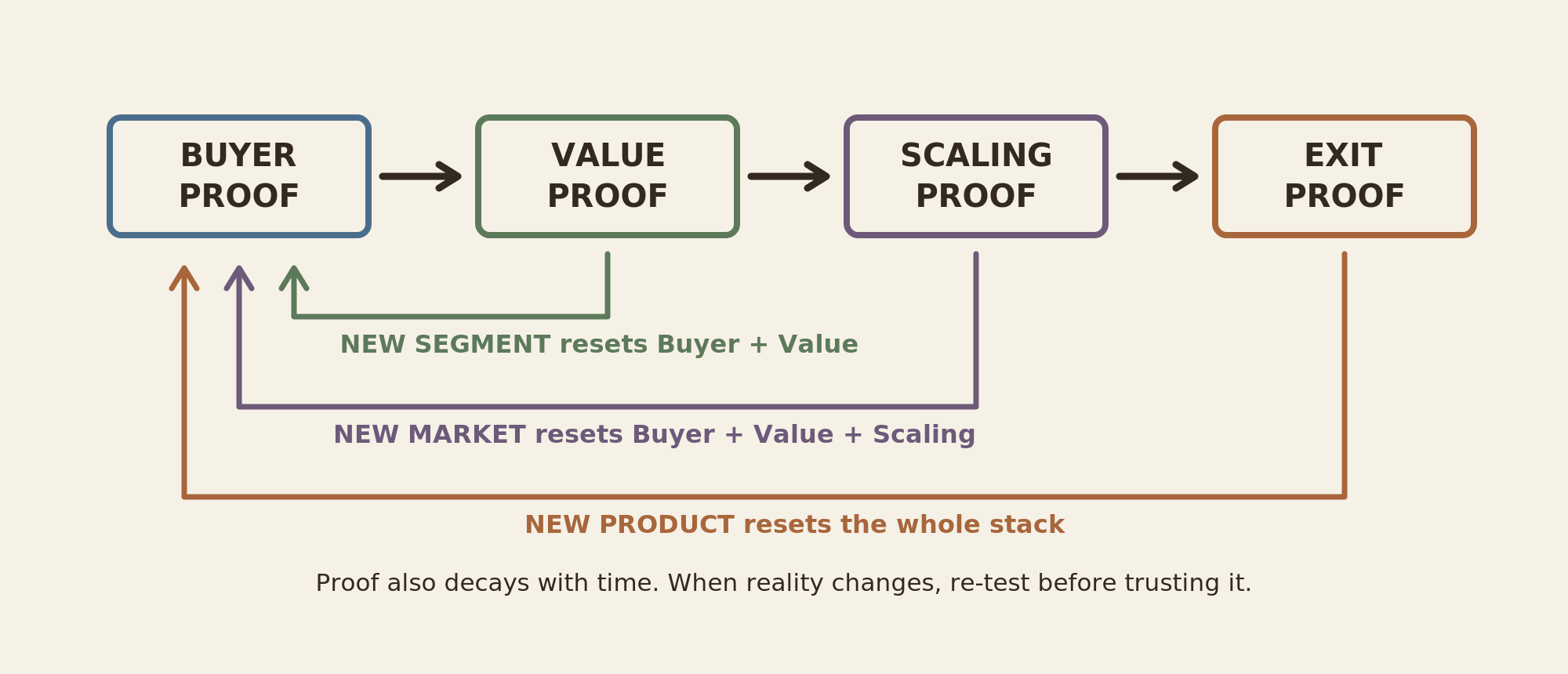
Proof also decays with time. When reality changes, re-test before trusting it.
Glossary
Whether a company is understandable, clean and useful enough that a rational buyer could acquire it.
Chapter Introduction
Knowing a later Proof Layer exists and letting it shape earlier decisions, without trying to earn that layer out of order. The stack itself is sequential, but awareness of what lies ahead is not.
Chapter Chapter 5
Buyer Proof is evidence that an identified buyer will commit budget, signature or scarce time to the product, on terms the company can state precisely.
A preference for founders who survive, adapt and use resources carefully, staying alive long enough for an opportunity to become usable, as opposed to unicorn mythology. It does not lower ambition; it changes the path.
Chapter Introduction
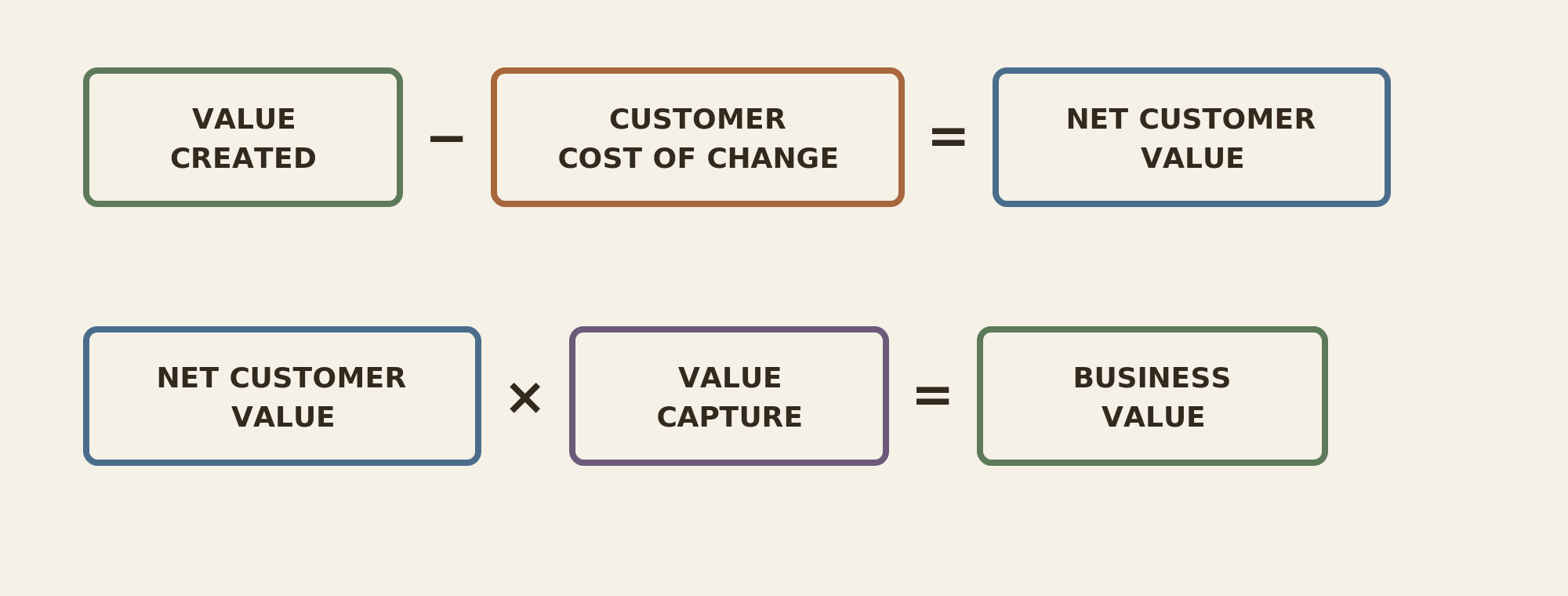
What adopting a new solution actually costs the customer: implementation, training, disruption, internal review and political risk. Value only means something once it is measured net of this cost.
Chapter Chapter 7
Work that exposes what the company does not yet understand, including interviews, research, advisor input and structured methods. It produces hypotheses, not proof; its output is the next thing to test.
Chapter Chapter 4
The person who controls the budget and owns the consequence of the purchase, not the user, the champion or the enthusiast.
Chapter Chapter 6
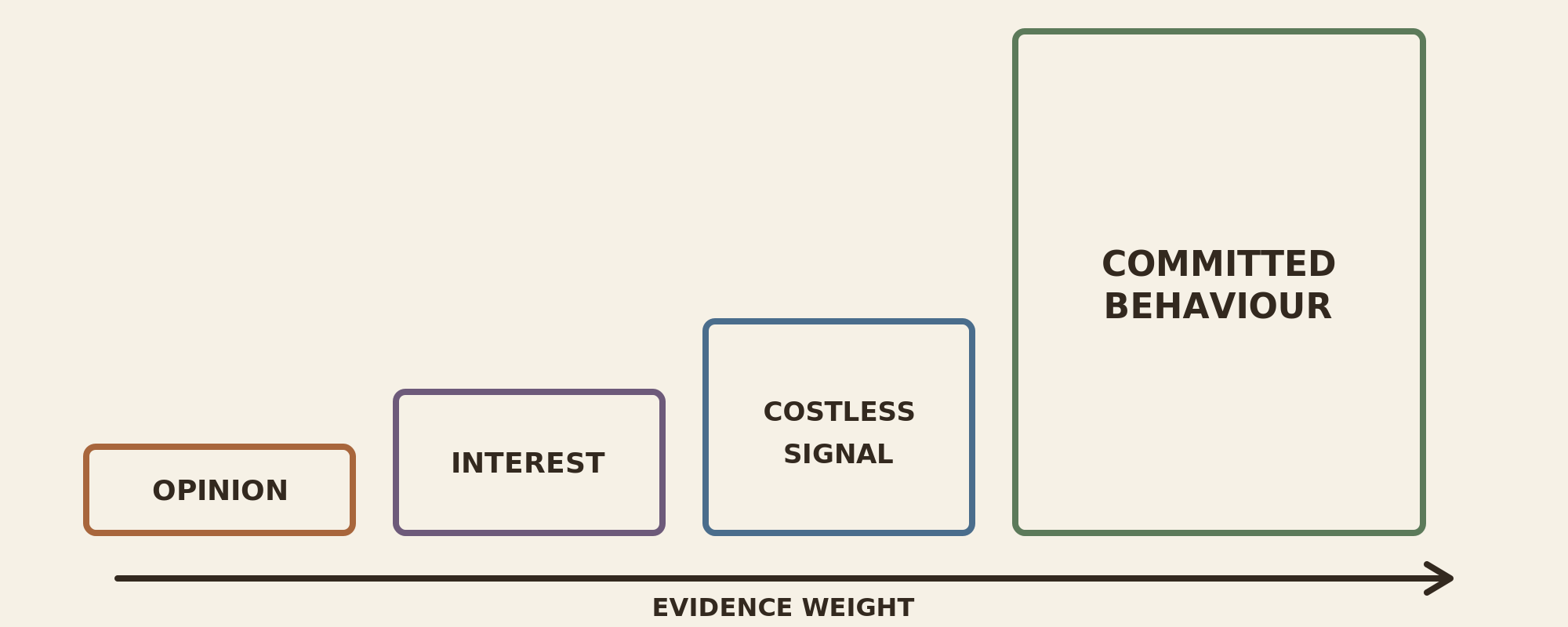
A set of questions applied to any claim, including received industry wisdom, before it is allowed to count as proof.
Chapter Chapter 3
Exit Proof is evidence durable and verifiable enough for an acquirer or later investor to underwrite without relying on the current team's interpretation.
Operational and diligence preparedness that makes a transaction executable. This is distinct from Exit Proof, which is about whether a buyer has reason to want the company at all.
Chapter Introduction
A company that is useful but not necessary: it survives, grows and keeps raising, yet no acquirer ever needs it enough to buy it. The earliest point to correct this is also the cheapest.
Chapter Chapter 9
Hull speed is the practical limit of a company's current operating model, beyond which additional spend or effort produces disproportionately small gains.
Chapter Introduction
The claim that an investor's required outcome actually matches the company's growth path, checked the way everything else in the book is checked: through behaviour, not narrative.
Chapter Chapter 9
Value created, minus the customer's cost of change, multiplied by how much of that value the company is able to capture.
One of the four Proof layers that follow the Discovery stage: Buyer Proof, Value Proof, Scaling Proof, or Exit Proof.
Chapter Chapter 5
The sales-development equation used in the book: quantity is the volume of customer-facing actions, quality is how well each is executed, and direction is whether they target the right buyers. The fix is to find the weakest of the three and work on that one.
Chapter Chapter 8
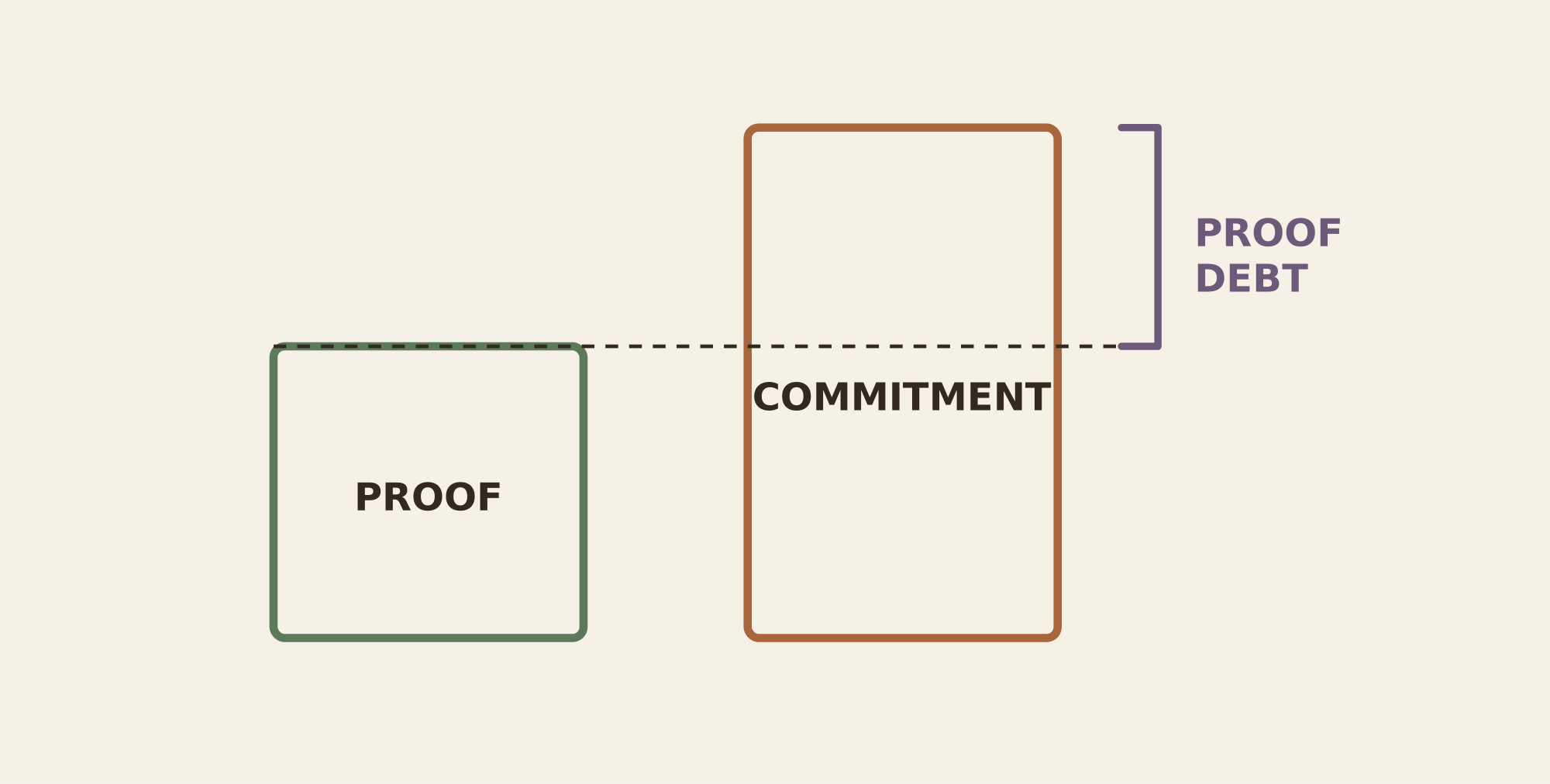
Never make a commitment larger than your proof. When commitment runs ahead of proof, the company is no longer executing; it is guessing.
Chapter Chapter 5
Every decision spends proof. Proof is not a trophy to keep; it is a budget to spend.
Chapter Chapter 5
If you cannot name the specific proof that is missing, you are guessing. Naming it turns a guess into a position that can actually be tested.
Chapter Chapter 5
Scaling Proof is evidence that the model continues to hold as volume, complexity and headcount rise, without depending on unrepeatable effort.
The book's evidence scoring scale: 0 for missing, 1 for a weak signal, 2 for partial proof, 4 for strong proof, 5 for durable proof. There is deliberately no score of 3, forcing a judgement call instead of a comfortable middle rating.
Chapter Chapter 5
The Proof Stack is an ordered model of the evidence a company must hold before a decision that is difficult to reverse: a Discovery stage followed by four Proof layers (Buyer Proof, Value Proof, Scaling Proof and Exit Proof).
Chapter Chapter 5
Insider closeness to a problem: customer understanding built before the company existed, combined with genuine access to reach the buyer. It describes evidence already collected, never a claimed exemption from needing evidence at all.
Chapter Chapter 6
Value Proof is evidence that the value delivered is recognised by the buyer in the buyer's own terms, and that it repeats.
Conventions
Recurring section types used throughout the chapters, rather than terms tied to one chapter.
The closing section of each chapter: what the founder is meant to carry out of it.
A recurring section type: a decision that deliberately consumed accumulated proof, and what that decision bought in return.
The closing exercise in each chapter: questions meant to be run against the reader's own company, not against the book's argument.
A recurring section type: a real decision the author lived through as a founder, operator, advisor, board member or early-stage first-in investor, told using only the evidence that was actually available at the time it was made. Every scar in the book happened to the author; none are composites or hypotheticals.
A recurring section type: the same kind of real, lived situation as a Scar, from the author's own experience as a founder, operator, advisor, board member or early-stage first-in investor, but one caught before the cost landed.
The one-sentence residue of a Scar: wording that repeats unchanged across the Proof Stack OS companion volumes.
The role a chapter is written for (founder, board or investor), stated at the chapter's opening.
A recurring section type: a public company used to illustrate a pattern, drawn from public reporting rather than from the author's own experience.
Disagree with something here, or want it covered from another angle? Send a short note.